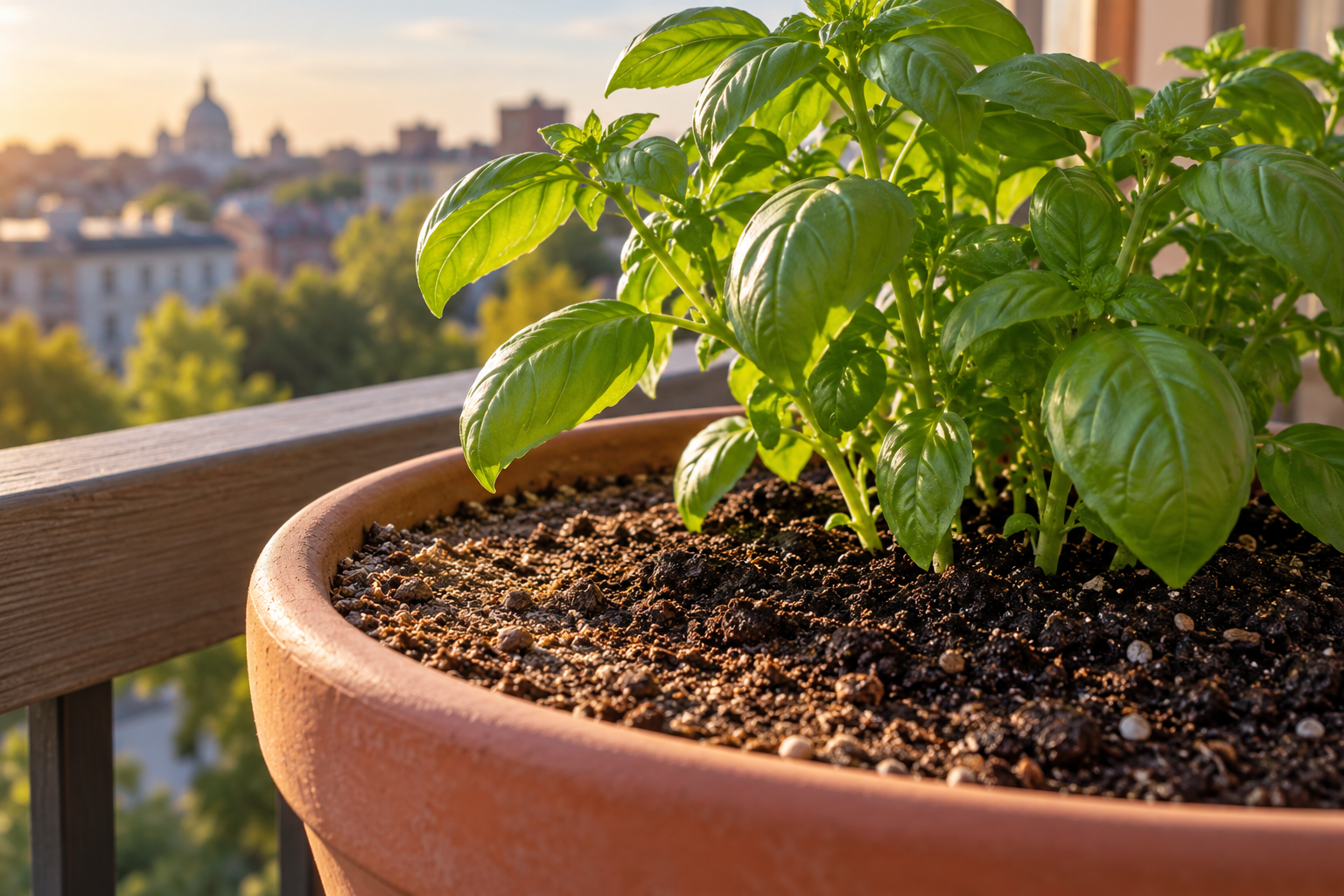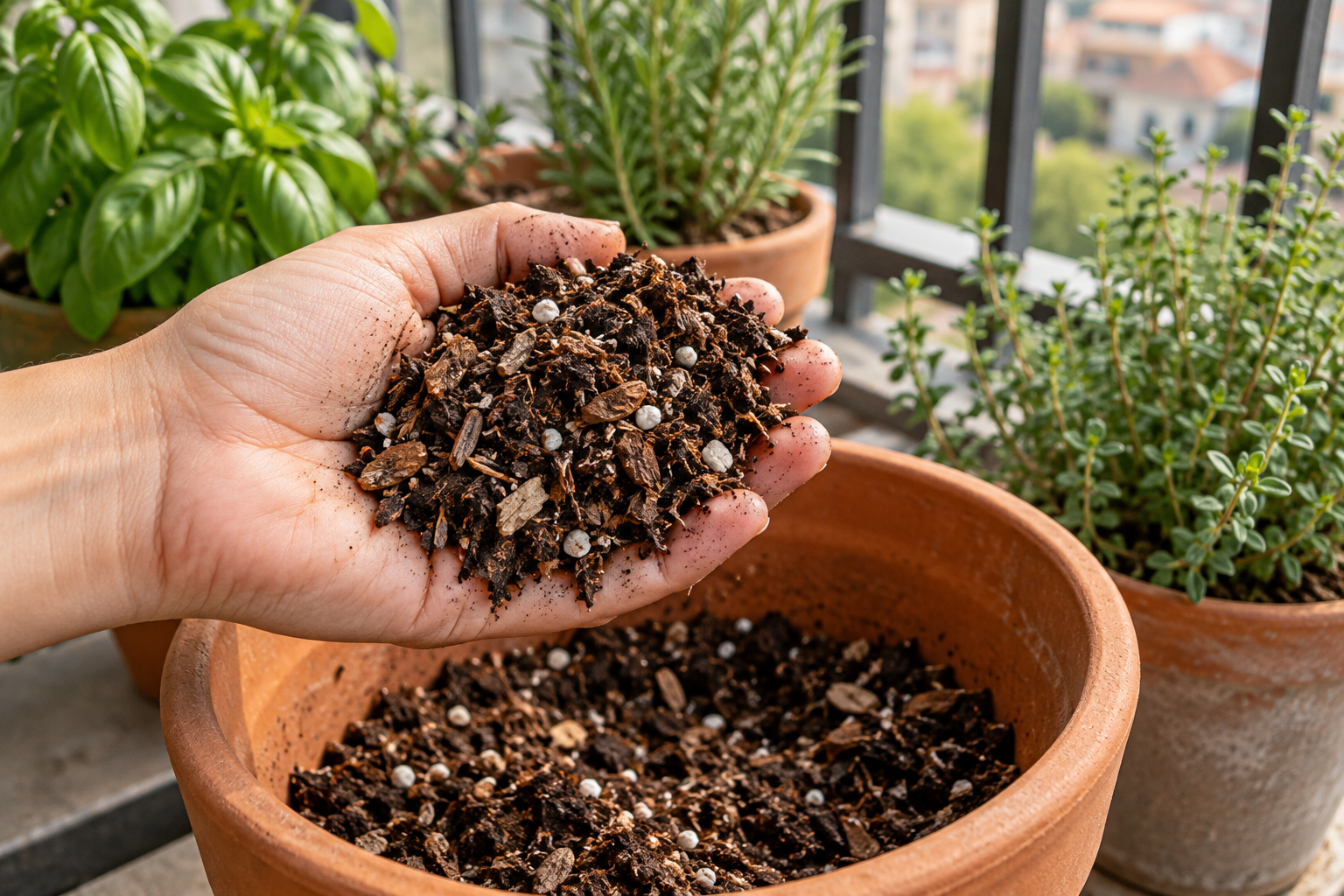
A pot can release water through its drainage hole and still hold a wet band of mix above it. The surface may look loose; the lower roots may have little air. That is the awkward part of choosing a potting mix by its ingredients alone. Roots need water stored close enough to draw in, and they need oxygen to reach them through the spaces water has left open. The useful question is how those spaces behave after watering, in this pot.
What the gaps do
Imagine measuring a pot by volume. Some of that volume is solid material: bark, coir, peat, mineral grains or whatever else the mix contains. The rest is pore space. When the mix is fully saturated, water occupies nearly all those pores. After water drains freely, some pores refill with air while smaller ones still hold water. Growers call the water retained then container capacity and the remaining air fraction air-filled porosity. These are measures of a particular mix in a particular container at a particular moisture state, not a promise printed on a bag. Container geometry study
The split matters because roots respire. They consume oxygen and release carbon dioxide. Gas must move from the atmosphere through connected air spaces in the mix to replenish the root zone. A pore that exists on paper but is full of water, or is isolated from neighbouring pores, does little for that route. Researchers who measured oxygen movement through seven greenhouse media found that air-filled volume alone did not describe gas transport equally well in materials with different internal pore structures. The path through the gaps matters as much as their total size. Gas-diffusivity study
Plants show why this is more than a pleasing diagram. In a greenhouse experiment, roses grew for 11 weeks in containers filled with loam separated into coarse, medium and fine particle groups. The fine treatment averaged only 1.3 percent air-filled porosity and produced almost no new roots; roots were scarce or absent in the oxygen-poor parts of the containers. The medium and coarse treatments averaged 7.6 and 15.9 percent and supported substantially more rooting. That is evidence about roses in those irrigated loams, not a magic percentage for balcony basil. It does show that a wet root zone can lack the oxygen needed for new growth even when water is abundant. Rose root experiment
More air is not an unlimited good. A chrysanthemum experiment compared sand, two grades of perlite and, in one trial, pumice under different watering arrangements. The low-air sand could limit growth through oxygen stress; the coarsest, airiest materials could limit it through water or nutrient stress. The response changed across experiments and conditions. A mix that empties rapidly may solve one problem and create a shorter watering window. Chrysanthemum aeration experiments
The pot changes the mix
The bottom of a container is a boundary. Gravity can pull water out through a hole, but small pores hold some water against that pull. After free drainage, the lowest part of the mix stays wetter than the material higher up. In a shallow pot, that wet region takes up more of the available depth. The hole is essential for excess water to escape; it does not turn the contents uniformly dry.
T. E. Bilderback and W. C. Fonteno combined measured water-retention curves with the shapes of four containers to calculate what the same mixes would hold after drainage. In one bark-and-sand mix, the model put air at 28 percent of volume in a larger nursery container and 12 percent in a short bedding-plant cell; retained water rose from 43 to 59 percent. These were calculated container–mix combinations, not a trial in which the same plant grew in both pots. They make the physical point plainly: a good result in a deep nursery pot need not carry over to a shallow balcony bowl. Container geometry study
Later researchers measured peat, rockwool and foam in short propagation cells using weighing and X-ray imaging. After drainage, those small cells still held 67–91 percent water by volume, with 5–11 percent air. The methods disagreed for some measurements in peat, another reminder that a single number deserves its test conditions. Propagation cells are much shorter than many household pots, but the study shows why container height and irrigation frequency belong beside mix composition in any account of root aeration. Propagation-substrate study
This is also why garden soil and potting mix should not be treated as interchangeable handfuls. Garden soil has a deep, open profile around it; in a pot, the same material meets a short column and a bottom boundary. A loam may work in a container under suitable conditions, as the rose experiment did with two coarser fractions, but the fine fraction under frequent irrigation lost much of its air-filled space. A prepared potting mix is built to manage water and air in that restricted volume. Its label tells you what went in; its behaviour depends on particle sizes, packing, pot depth and watering. Rose root experiment Container geometry study
Ingredients still matter, but their names do not settle the question. In a 2024 petunia experiment, four blends each contained 35 percent aged pine bark and 65 percent of one fibre: peat, coir, wood fibre or sugarcane bagasse. Total pore space ranged from 83 to 92 percent. The coir blend held the most water after drainage and also had the highest total porosity; the wood and bagasse blends had the most air space and less retained water. The petunias' growth also depended on fertilizer and pH, so the study cannot crown one fibre as the best potting ingredient. It shows how two mixes with plenty of pores can divide those pores very differently between air and water. Petunia substrate experiment
Packing changes the spaces again. A research team measuring bark, coir, peat and their blends compared ways of filling test containers with the densities reached in nursery practice. Small changes in how tightly material was packed changed measured water retention and air space. That does not make every gentle settling tap harmful. It does make vigorous compression a poor substitute for choosing a mix whose structure suits the pot. A soft bagful and a firmly pressed potful are different physical arrangements of the same ingredients. Substrate-packing study
The familiar gravel question also needs a narrower answer than garden folklore gives it. A 2025 experiment tested two depths and four kinds of coarse drainage layer under three potting media. In the two loamless organic mixes, nearly all the layers reduced whole-container water retention after saturation and drainage; in the loam-based mix, most made little difference. The researchers did not grow plants in those pots, and their models disagreed on some results for the loam. The study measures retained water under its test conditions. It cannot tell us whether a layer improves the roots of a particular herb, and the layer occupies some of the pot's growing volume. Drainage-layer experiment
For a balcony pot, I would start with the whole arrangement: a container with an unobstructed drainage opening, a mix that holds useful moisture without staying sodden, and a watering rhythm the plant and place can live with. After an ordinary watering, let the pot drain and notice how its weight and moisture change over the following days. If the lower mix stays wet long after the upper surface has dried, watering sooner will not create more air below. If the pot becomes light and the plant thirsty before the next practical chance to water, an extremely coarse mix may have given away too much of its reservoir. Those observations are more useful than a universal recipe because they describe the actual pot in front of you.
The empty spaces are doing the work. They hold a drink, release the excess and leave a route for air. Their proportions change with water, material, packing and height. Once you see the mix as that moving balance, choosing it becomes less like buying the right ingredient and more like making room for roots to function.

A thought worth keeping?