The delivery driver arrived with a box large enough to contain a modest refrigerator. Inside were three containers, a bag of accessories and the growing conviction that I had been an idiot. I own a balcony, not a country estate. Half the floor had vanished before a single leaf appeared.
I had gone looking for advice about growing herbs and somehow returned with a procurement strategy. Every photograph suggested another necessary object. The matching pots were necessary. The special rack was necessary. Apparently a person cannot approach parsley without first assembling a tasteful outdoor lifestyle.
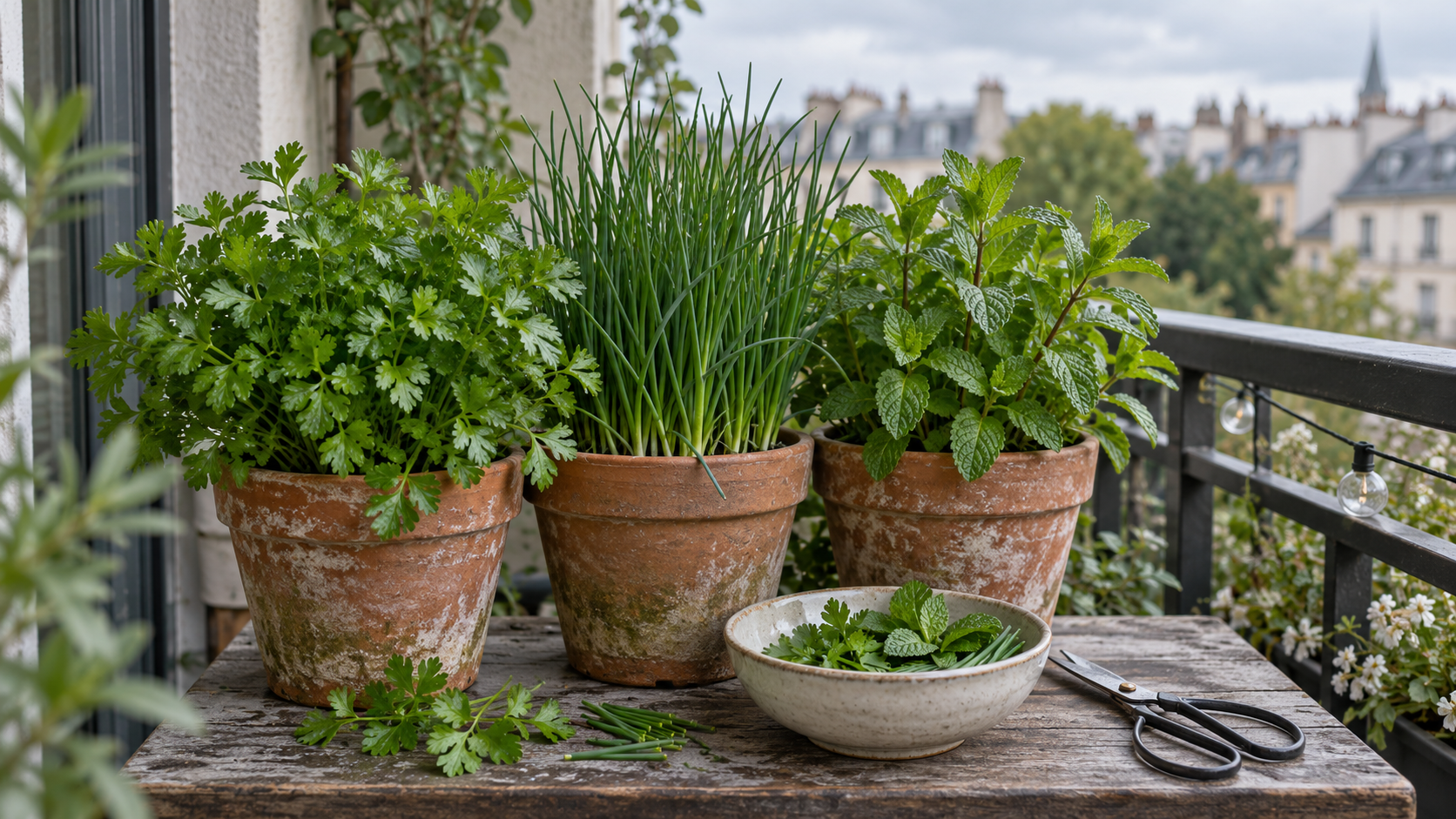
Meanwhile, an old terracotta pot beside the kitchen door was producing chives. It had not attended the lifestyle briefing.
Count the dinners, not the deliveries
I started keeping a list of what I actually picked. A handful of parsley went into beans. Chives went onto eggs. Mint made a jug of water feel like an effort had been made. Three ordinary meals, three small reasons to walk outside. That was the bit I had wanted before the shopping tab multiplied.
The list also changed what counted as success. A balcony harvest does not need to replace a supermarket department. If I can reach for a few fresh leaves when I am already cooking, the pot has a useful job. A tiny harvest I use beats an impressive plant I keep forgetting to pick.
This is not a recommendation to buy the same three herbs. My balcony gets its own peculiar mixture of light, wind and rain. Yours will have a different set of annoyances. Notice the space before copying the photograph. Watch where the light lands through the day. Check whether a pot can sit securely without obstructing the route to the chair. Ask how you will get water to it when life becomes busy.
My bookshop shifts move around, so a system that assumes I will provide a devoted performance at precisely the same hour is already in trouble. The pots need to fit an ordinary working week. The plants do not become more resilient because I have made a beautiful spreadsheet.
Give each purchase an actual problem
One pot was too awkward to move. Another dried out more quickly than I expected. Those were concrete problems. I could change a position, revise the watering routine or reconsider the container. Buying a complete collection of matching things would have made both problems more coordinated, which is a splendidly useless achievement.
I now begin with a container I can handle, a plant I expect to use and a place I can observe. I keep the balcony passage clear and check the building's rules before adding weight or attaching anything. There is no harvest worth making a shared building less comfortable for the people around it.
Secondhand pots have their own charms, although I inspect and clean them rather than assuming a bargain is automatically suitable. The important question is whether the container works for this plant and this space. Its ability to look expensive from the kitchen window comes considerably later.
There are talented gardeners online who teach useful things. There is also an endless display of objects photographed as if owning them were the same as knowing what to do next. I needed to separate those two experiences.
Yesterday I cut chives into lunch while standing in my slippers. The mismatched pot looked completely unimpressed with the occasion. I took the leaves inside, shut the door and ate. No delivery notification was involved.

A thought worth keeping?